
- 1. Introduction
- 2. Points clés à retenir
- 3. Les écouteurs étanches sont-ils vraiment submersibles ?
- 4. Étanches vs. résistants à l'eau : que signifient les indices ?
- 5. Pourquoi IPX7 et IPX8 ne sont pas identiques ?
- 6. Pourquoi le Bluetooth ne fonctionne pas bien sous l'eau ?
- 7. Quels modèles d'écouteurs sont les mieux adaptés à la natation ?
- 8. Le port de chargement est également important.
- 9. Eau de piscine, eau salée et transpiration.
- 10. Option phare pour la natation : NANK Runner Diver2 Pro
- 11. Comment les écouteurs de natation courants se comparent-ils ?
- 12. Avez-vous besoin d'écouteurs de natation pour courir ?
- 13. Comment entretenir les écouteurs étanches ?
- 14. Questions fréquemment posées
- 15. Conclusion
Introduction
Le mot « étanche » apparaît sur d'innombrables listes d'écouteurs, mais cela ne signifie pas automatiquement qu'une paire est adaptée à la natation. Un produit qui résiste à la transpiration, à la pluie ou à une chute accidentelle dans l'eau peut ne pas être conçu pour une immersion répétée.
Pour les nageurs, les informations les plus utiles sont l'indice IP du produit et les conditions de test déclarées par le fabricant. Ces détails peuvent vous aider à comprendre si une paire est destinée aux éclaboussures, à une immersion temporaire ou à des activités aquatiques plus exigeantes.
Ce guide explique les différences entre les indices de résistance à l'eau courants, pourquoi le Bluetooth devient peu fiable sous l'eau, quels modèles d'écouteurs sont les mieux adaptés à la natation et comment choisir un modèle en fonction de votre entraînement réel.
Points clés à retenir
• IPX4 et IPX5 sont généralement destinés à la transpiration, à la pluie et aux éclaboussures plutôt qu'à la natation.
• L'IPX7 couvre l'immersion temporaire dans des conditions de test spécifiées, mais cela ne rend pas automatiquement un produit idéal pour la natation régulière.
• L'IPX8 couvre l'immersion au-delà de 1 mètre, avec la profondeur et la durée exactes spécifiées par le fabricant.
• Les signaux Bluetooth s'affaiblissent considérablement sous l'eau, de sorte que les écouteurs de natation s'appuient souvent sur le stockage de musique intégré.
• Pour une utilisation fréquente en piscine, la conception globale – y compris l'étanchéité, la méthode de chargement, le stockage, l'ajustement et l'entretien – est importante, en plus de l'indice IP.
Les écouteurs étanches sont-ils vraiment submersibles ?
Certains écouteurs peuvent être immergés, tandis que d'autres sont uniquement conçus pour résister à la transpiration, à la pluie ou aux éclaboussures. Le terme « étanche » seul ne vous indique pas comment un produit a été testé.
Pour la natation, allez au-delà du langage marketing et vérifiez l'indice IP ainsi que les limites de profondeur ou de durée fournies par le fabricant. En général, les IPX4 et IPX5 visent la résistance aux éclaboussures et à la transpiration, l'IPX7 couvre l'immersion temporaire dans le cadre d'un test défini, et l'IPX8 est utilisé pour les produits testés pour une immersion au-delà de 1 mètre dans des conditions spécifiées par le fabricant.
Cette distinction est importante car deux produits portant le même indice IPX8 peuvent néanmoins avoir des profondeurs ou des durées de test différentes. Vérifiez toujours la documentation du produit avant de supposer qu'un indice IP garantit l'adéquation à une activité particulière.
Étanches vs. résistants à l'eau : que signifient les indices ?
La façon la plus simple de comparer la protection contre l'eau est de regarder l'indice IP plutôt que de se fier uniquement à des termes tels que « résistant à l'eau » ou « étanche ». Nous avons déjà expliqué la signification des indices IP et les résumons brièvement ici.

IPX4 : Convient pour la transpiration et les éclaboussures.
IPX5 : Conçu pour résister aux jets d'eau dans des conditions de test spécifiées.
IPX6 : Conçu pour résister aux jets d'eau puissants dans des conditions de test spécifiées.
IPX7 : Testé pour une immersion temporaire dans des conditions définies, généralement jusqu'à 1 mètre pendant 30 minutes.
IPX8 : Testé pour une immersion au-delà de 1 mètre, avec les conditions exactes spécifiées par le fabricant.
Pour la natation régulière, un produit classé IPX8 ou similaire, avec des conditions d'utilisation sous-marines clairement indiquées, est généralement la catégorie la plus pertinente à examiner. Un indice IP doit également être considéré avec les conseils d'utilisation du fabricant.
Pourquoi IPX7 et IPX8 ne sont pas identiques ?
L'IPX7 utilise un test d'immersion défini, tandis que l'IPX8 permet au fabricant de spécifier les conditions au-delà de la base IPX7. Cela signifie que l'étiquette IPX8 seule ne vous dit pas tout ce que vous devez savoir.
Par exemple, un produit peut être testé pour une profondeur et une durée particulières, tandis qu'un autre peut utiliser des conditions différentes. Si vous prévoyez de nager régulièrement, vérifiez la profondeur maximale indiquée, l'activité prévue et les instructions d'entretien plutôt que de comparer les indices isolément.
Pourquoi le Bluetooth ne fonctionne pas bien sous l'eau ?
Le Bluetooth fonctionne dans la bande radio de 2,4 GHz, et l'eau affaiblit considérablement les signaux radio à cette fréquence. Par conséquent, un téléphone placé sur le bord de la piscine peut ne pas maintenir une connexion fiable avec les écouteurs lorsque la tête du nageur plonge et ressort de l'eau.
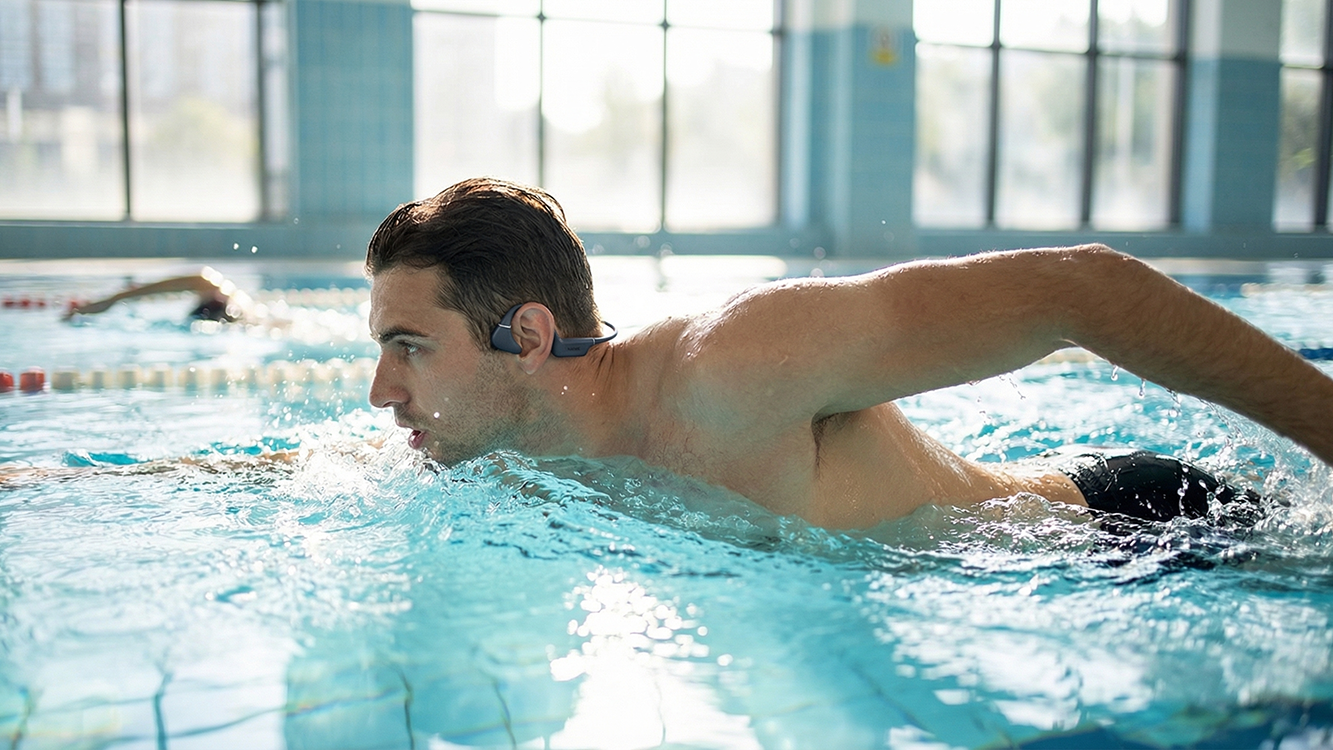
C'est pourquoi de nombreux écouteurs conçus spécifiquement pour la natation incluent un stockage intégré. Vous pouvez transférer des fichiers audio compatibles sur l'appareil avant d'entrer dans l'eau et écouter sans dépendre d'une connexion Bluetooth active.
Les modèles hybrides peuvent toujours utiliser le Bluetooth sur terre tout en passant à la lecture locale pour la natation, offrant aux utilisateurs un seul appareil pour les entraînements aquatiques et quotidiens.
Quels modèles d'écouteurs sont les mieux adaptés à la natation ?

Des écouteurs de natation nécessitent plus qu'un indice IP élevé. La conception physique affecte également la convivialité à long terme.
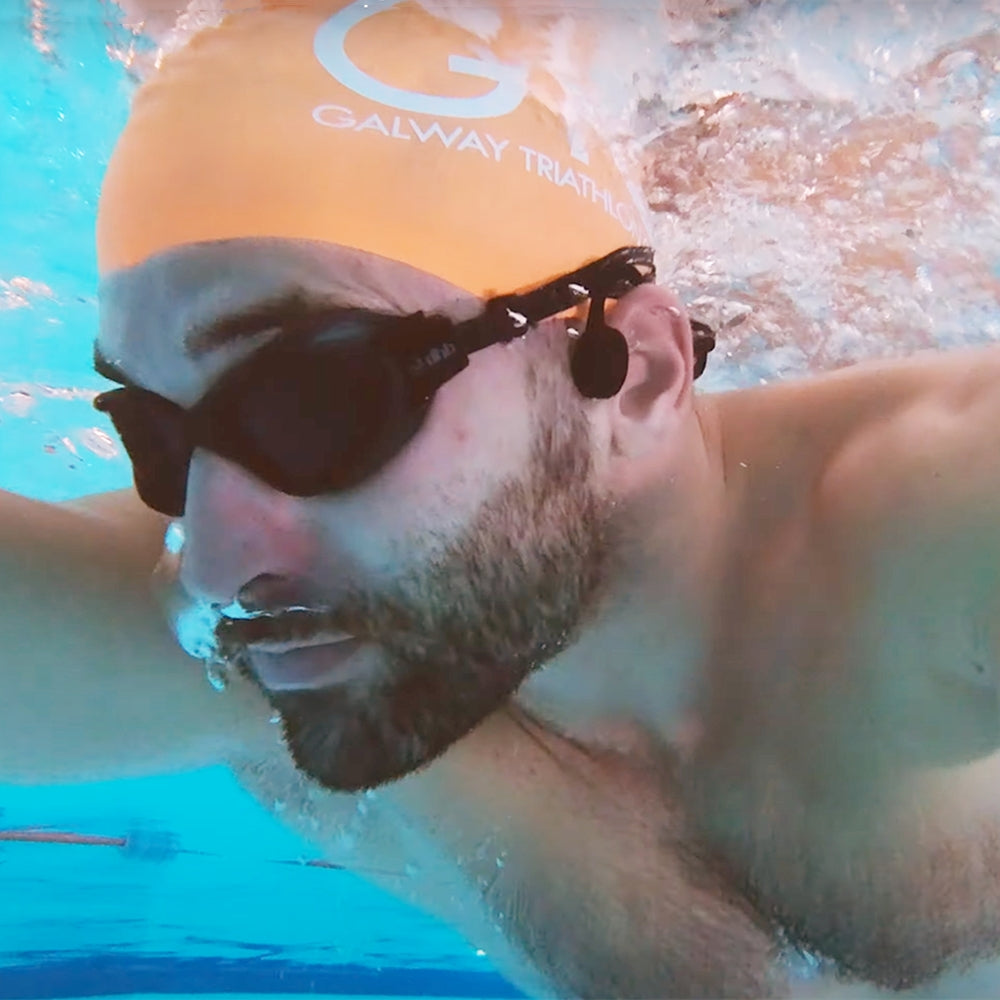
Les modèles à conduction osseuse sont populaires car ils laissent le conduit auditif ouvert et peuvent être intégrés dans une structure compacte et étanche. De nombreux nageurs utilisent également des bouchons d'oreille, qui peuvent aider à réduire l'entrée d'eau dans le conduit auditif et modifier le son perçu.
Les écouteurs intra-auriculaires résistants à l'eau peuvent bien fonctionner pour la sueur et la pluie, mais tous les modèles ne sont pas conçus pour rester stables ou fonctionner de manière fiable lors d'immersions répétées. Les casques supra-auriculaires traditionnels sont généralement moins pratiques pour la natation, car les coussinets et les boîtiers plus grands ne sont pas conçus pour une utilisation prolongée sous l'eau.
Le meilleur choix dépend de si la natation est votre activité principale ou simplement une partie occasionnelle d'une routine de remise en forme plus large.
Le port de charge compte aussi.
La protection contre l'eau ne concerne pas seulement la coque extérieure. Les ports de charge et les contacts électriques peuvent également affecter la durabilité à long terme.
Les ports USB ouverts sont pratiques mais nécessitent un séchage et un nettoyage minutieux. Les contacts de charge magnétiques peuvent réduire la taille des ouvertures exposées, tandis que les conceptions plus entièrement scellées peuvent utiliser d'autres méthodes de charge.
Quel que soit le système de charge, ne chargez pas les écouteurs si de l'humidité est présente sur la zone de charge. Suivez les instructions du fabricant et laissez l'appareil sécher complètement après la baignade ou le rinçage.
Eau de piscine, eau salée et sueur.
Différents environnements imposent différentes exigences aux équipements électroniques. L'eau de piscine peut contenir du chlore et d'autres produits chimiques de traitement, tandis que l'eau salée peut laisser des résidus corrosifs. La sueur peut également laisser des sels et des huiles sur l'appareil après des entraînements répétés.
Pour cette raison, le rinçage et le séchage sont des aspects importants de l'entretien. Même un produit conçu pour l'exposition à l'eau bénéficie d'un entretien régulier, surtout après une utilisation dans de l'eau chlorée ou salée.
Les exigences d'entretien exactes varient selon le modèle, de sorte que les instructions du fabricant doivent toujours prévaloir.
Option mise en avant pour la natation : NANK Runner Diver2 Pro
Pour les utilisateurs à la recherche d'un modèle conçu pour la natation et une utilisation sportive plus large, le NANK Runner Diver2 Pro se positionne comme une combinaison de construction étanche, d'écoute par conduction osseuse et de stockage de musique intégré.
Selon les informations produit fournies dans le brouillon original, les caractéristiques clés incluent :
• Protection contre l'eau de niveau IP69
• 32 Go de stockage intégré pour la lecture de musique locale
• Bluetooth 5.4 pour une utilisation sur terre
• Environ 10 heures d'autonomie de la batterie
• Une conception à conduction osseuse
• Chargement magnétique
• Un ajustement réglable conçu pour le sport et la natation
La combinaison du stockage local et d'une conception axée sur l'eau est particulièrement pertinente pour les nageurs, car le streaming Bluetooth est généralement peu fiable une fois que le casque est immergé à plusieurs reprises.
Comme pour tout appareil étanche, les utilisateurs doivent consulter les limites indiquées par le fabricant et les instructions d'entretien avant de l'utiliser pour la natation ou d'autres activités aquatiques.
Comment se comparent les casques de natation courants ?
Différents casques de natation se concentrent sur différentes priorités. Certains mettent l'accent sur le stockage intégré, tandis que d'autres se concentrent sur la polyvalence multisports, l'ajustement, l'autonomie de la batterie ou les spécifications de profondeur sous-marine.
Lorsque vous comparez des produits, tenez compte de :
• L'indice de résistance à l'eau et les conditions de test déclarées par le fabricant
• La présence ou non d'un stockage de musique local
• La capacité de stockage
• L'autonomie de la batterie
• L'ajustement et la stabilité pendant la natation
• La méthode de chargement
• Si le casque sera également utilisé pour la course, le cyclisme ou l'écoute quotidienne
Un indice IP plus élevé ne signifie pas automatiquement qu'un produit est le meilleur choix pour chaque utilisateur. Le bon modèle dépend de la fréquence de vos baignades et des autres activités que vous souhaitez qu'il prenne en charge.
Avez-vous besoin d'un casque de natation pour courir ?
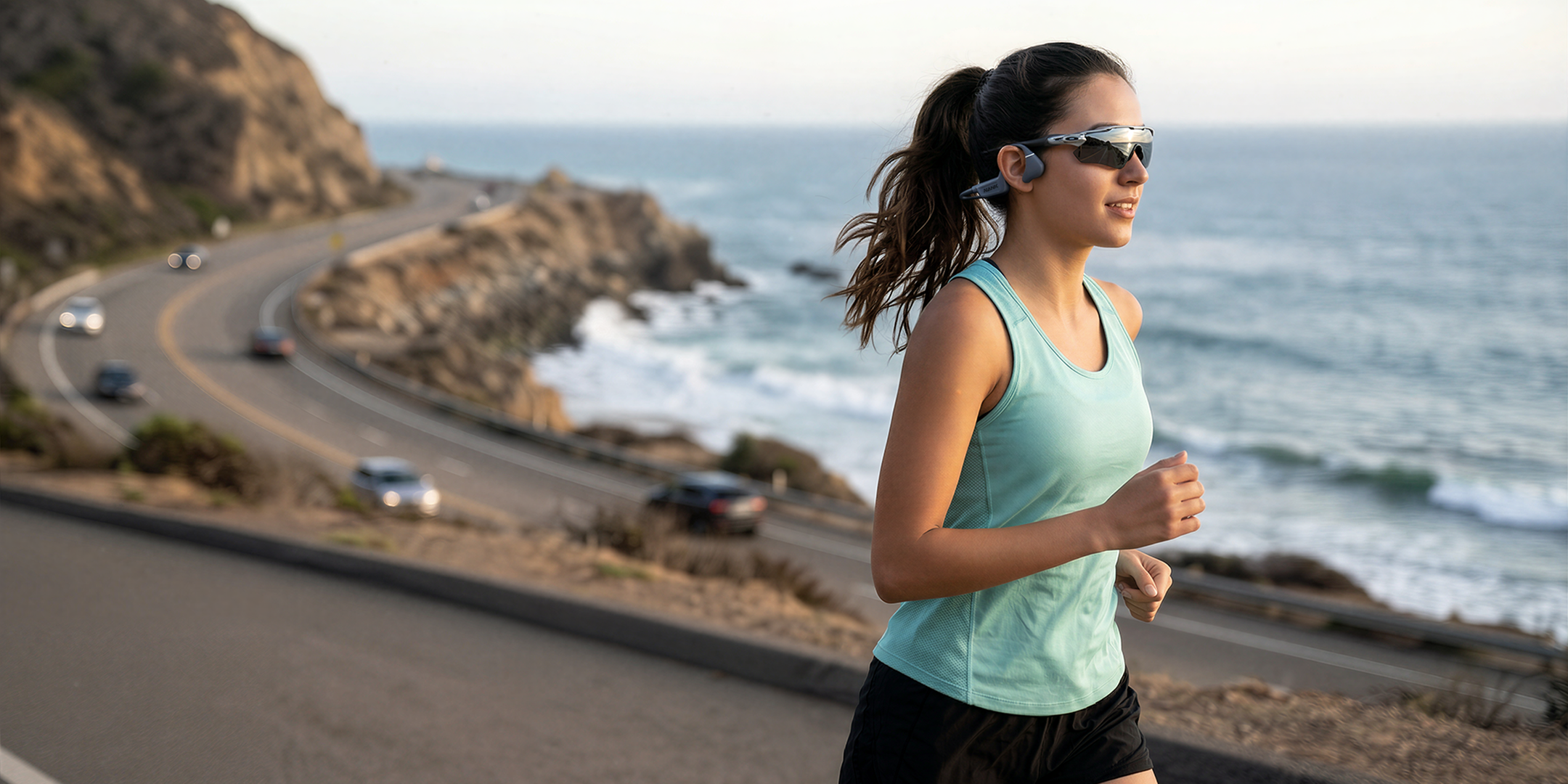
Pas nécessairement. Si vos entraînements impliquent principalement la course, le cyclisme, des séances de gym ou des trajets quotidiens, un modèle plus léger avec une protection appropriée contre la transpiration et la pluie peut être plus pratique.
Les écouteurs axés sur la natation privilégient souvent l'étanchéité et le stockage interne, ce qui peut ajouter des fonctionnalités dont vous n'avez pas besoin pour l'exercice terrestre. Si vous ne nagez qu'occasionnellement, demandez-vous si un modèle dédié à la natation vaut le compromis.
La meilleure approche consiste à adapter le niveau de protection et l'ensemble des fonctionnalités à votre routine réelle, plutôt que de simplement choisir la cote la plus élevée disponible.
Comment entretenir les écouteurs étanches ?
1. Rincez les écouteurs à l'eau douce après une exposition à l'eau chlorée ou salée si le fabricant le recommande.
2. Laissez l'appareil sécher complètement avant de le recharger.
3. Gardez les contacts de charge et les ports propres.
4. Évitez d'appliquer une chaleur inutile pour sécher les écouteurs.
5. Vérifiez régulièrement les embouts auriculaires, les sangles et les autres accessoires remplaçables.
6. Suivez les instructions d'entretien spécifiques au produit, car les conceptions et les matériaux étanches varient selon les fabricants.
Questions fréquemment posées
Les écouteurs IPX8 peuvent-ils être utilisés à n'importe quelle profondeur ?
Non. IPX8 ne signifie pas que tous les produits ont la même limite de profondeur sous-marine. Vérifiez les conditions de test et l'utilisation prévue indiquées par le fabricant.
Les écouteurs IPX8 peuvent-ils être utilisés en eau salée ?
Une cote IP seule n'élimine pas la nécessité d'un entretien après une exposition à l'eau salée. Suivez les instructions du fabricant et rincez l'appareil si recommandé.
Les écouteurs à conduction osseuse fonctionnent-ils sous l'eau ?
Certains écouteurs à conduction osseuse sont conçus spécifiquement pour la natation. La perception du son peut différer sous l'eau, et les bouchons d'oreille peuvent affecter l'expérience d'écoute.
Puis-je utiliser des écouteurs IPX7 pour la natation ?
IPX7 indique une immersion temporaire dans des conditions de test spécifiées, mais l'adéquation pour des longueurs de piscine répétées dépend du produit individuel et de l'utilisation prévue par le fabricant.
Conclusion
Tous les écouteurs étanches ne sont pas conçus pour le même environnement. Une paire conçue pour la sueur et la pluie peut être très différente d'un modèle conçu pour la natation répétée.
Si la natation est votre principale priorité, recherchez un produit avec une cote d'immersion appropriée, des conditions d'utilisation clairement énoncées, un ajustement sécurisé et un stockage interne pour une lecture sans téléphone. Si vous courez ou vous entraînez principalement sur terre, un modèle plus léger et résistant à l'eau peut être plus adapté.
L'étape la plus importante est de ne pas se limiter au mot "étanche". Vérifiez la cote IP, comprenez les conditions de test du fabricant et choisissez un design qui correspond à la façon dont vous comptez l'utiliser, et à l'endroit où vous comptez l'utiliser.