
Introduction
Open ear headphones have changed the way people listen to music while running, cycling, commuting, working, and exercising.
Unlike traditional in-ear headphones, they don’t completely seal the ear canal. This allows you to enjoy music or podcasts while remaining more aware of the sounds around you.
But how do open ear headphones actually work?
The answer depends on the technology inside the headphones. Some open ear headphones use bone conduction technology, while others use air conduction technology. Although both designs keep the ear canal open, they deliver sound in very different ways.
In this guide, we’ll explain how open ear headphones work, how bone conduction differs from air conduction, why sound leakage happens, how to wear them properly, and what to look for when choosing open ear headphones for sports or everyday use.
How Do Open Ear Headphones Work?
The Signal Starts As Data, Not Sound
The receiver chip receives the compressed audio signal from your phone via Bluetooth, then a small DAC converts the numbers back into an analog signal, and an amplifier feeds a transducer. Nothing here is exotic; it follows the same first 3 steps as any wireless earbud.
● What varies between models is codec choice: SBC and AAC are the most common, and latency is typically 120 to 180ms, dropping to 60ms in gaming modes.
The Transducer Decides Which Road Sound Takes
The fork stumps nearly all buyers. A vibrating transducer is a puck that vibrates at audio frequencies against the cheekbone. This is the way of bone conduction. Your ear canal remains open, and only this design uses your skeleton.
Bone Conduction: Your Skull Becomes The Speaker

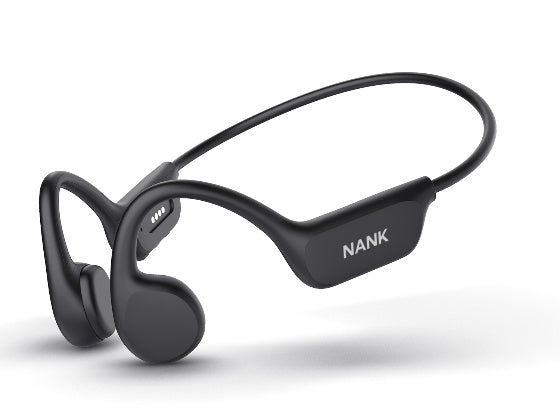
So, how do open ear bone conduction headphones work? The transducer is placed on the ridge of bone just in front of your tragus and transforms the electrical signal into a mechanical vibration. This vibration passes through bone and soft tissue directly to the cochlea, and does not go through your eardrum at all.
The Physical Limits Nobody Advertises
● Contact Pressure: If it is too loose, the bass will disappear, and if it is too tight, by mile four you will feel it in your jaw.
● Frequency Floor: Skull transmission becomes inefficient below 100 Hz, and sub-bass becomes a tickle instead of a note.
● Hair And Glasses: A thick ponytail under the band or a wide temple arm takes the transducer off the bone, causing a loss of volume.
Leakage Gets Managed Before You Ever Hear It
Open designs are in an acoustic Catch-22 situation. If the sound is loud enough for you, it is loud enough for the person next to you. Decent engineering counters that problem with a rear port that spits the inverted copy of the waveform. Two waveforms cancel each other out when they are out in the room. Close to your ear, they do not cancel. The typical cancellation provides 6 to 10 dB of reduction, real and measurable.
The Open Canal Changes Comfort, Not Just Awareness
If you plug your ear, your voice becomes 15 to 20 dB louder at the low frequencies. That is the occlusion effect, the boomy head-voice you get from a conference call with tips in. Open designs delete it completely.
● Canal Humidity: No seal means no warm, damp chamber, which is why clinicians equate long sealed-earbud sessions with irritation.
● Pressure Fatigue: Canal walls are not pushed outwards, so four-hour sessions are no longer a chore.
Pro Tip: If the bone conduction pair feels thin, move it forward 5mm before adjusting the volume. 9 out of 10 times, contact placement causes the issue, not the hardware.
Do Open Ear Headphones Leak Sound?
Do open ear headphones leak sound? Yes, all of them leak, but not to the extent that everyone says. At a normal room volume below about 60%, a person one meter away hears a slight high-frequency tick at best, and with any background noise above 45 dB, they hear nothing recognizable. These field notes were taken with an SPL app in a quiet office and represent ballpark figures, not laboratory testing.
| Volume | At 1 foot | At 3 feet | Realistic setting |
| 25% | Talkative | Talkative | Shared desk |
| 60% | Medium tick | Low noise | Commuter train |
| 80% | Rhythm audible | Clear | Gym floor |
| 90% | Lyrics discernible | Rhythm | Outdoors only |
Is Open Ear Headphones Safe For Long-Term Hearing?
Is open ear headphones safe for daily listening? Yes, broadly speaking, they function quite possibly more safely than closed options. Sealed tips tend to lead to overexposure by having people turn up the music to mask ambient noise. An open tip allows you to listen to the world at 60% and keep well under safe daily exposure.
The notion that bone conduction does not harm hearing is a lie. The same hair cells are stimulated by vibration. Run the audio in overdrive long enough, and you will have the same permanent loss.
Therefore, are open ear earbuds better for your ears? Obviously, they win on hygiene and canal health, because the headphone is no need to plug into the ear canal and it can keep the inside of the ear canal clean and hygienic. When it comes to hearing conservation, they only help if you take advantage of the awareness boost rather than using the volume button to combat road noise.
Warning: If you experience a tickle or numbness at the contact point after a session which persists, the transducer is being run too hot. Drop the volume 15% and it stops.
How To Wear Open Ear Headphones So They Stop Slipping?
Wondering how to wear open ear headphones correctly? Most disappointment lives in fit, and that remains a 90-second problem.
1. Seat the transducer in front of the tragus, on bone, not on soft tissue behind the jaw hinge.
2. Route the band under the occipital ridge (back of the skull), not over it.
3. Move hair out from under the contact pads: Each strand creates a low-end cost.
4. Headphones on first, then place the glasses over the headphones.
5. Tie ponytails low or to one side to allow the band to pass smoothly.
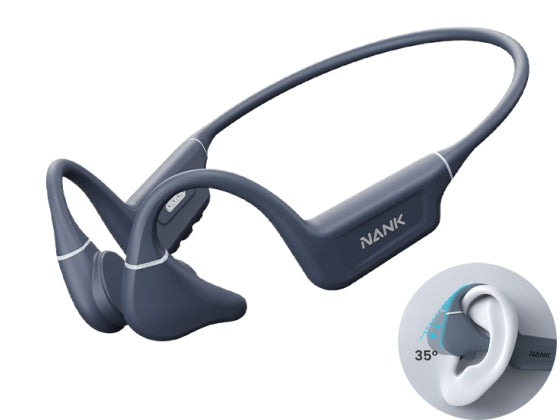
Pick up the bone conduction headphone with both hands and put it on from the back of the neck. Hook the headphone to each ear so that it fits snugly on your cheekbone position, then adjust the wearing comfort. To accommodate various head sizes, NANK headphones include a silicone strap in their accessories, which secures the headphones more snugly to the head.
In addition, bone conduction headphones can be used perfectly with various types of glasses and helmets.
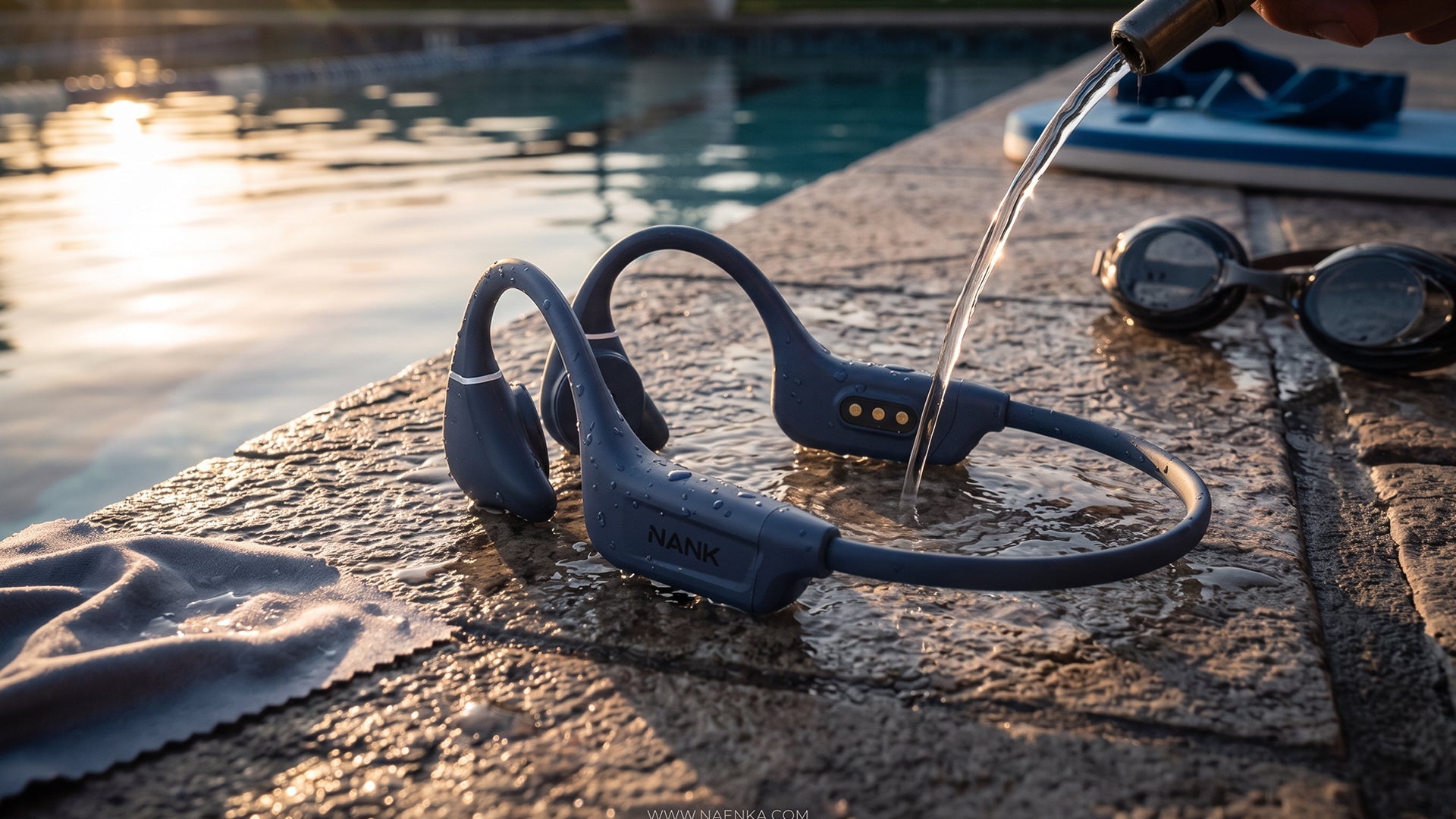
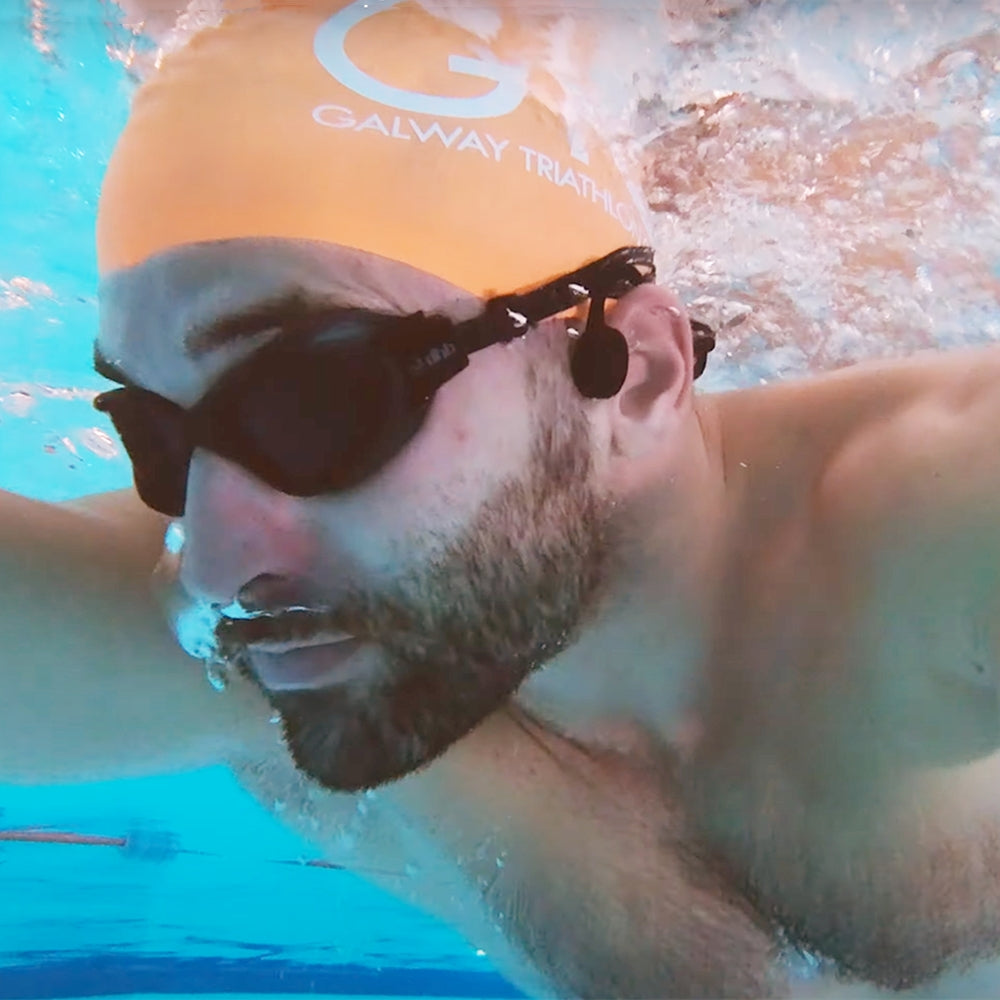
NANK Runner Diver2 Pro: Designed for Both Land and Water
The NANK Runner Diver2 Pro is designed around this combination of bone conduction audio, waterproofing, and onboard storage.
It supports both Bluetooth mode and MP3 mode, allowing it to be used as a conventional wireless headphone on land and as a standalone music player while swimming.
According to NANK’s product specifications, the Runner Diver2 Pro features:
· IP69 waterproofing
· 32 GB onboard storage
· Bluetooth 5.4
· Up to 10 hours of battery life
· Open-ear and noise-canceling modes
· 35° adjustable design
· NANK 4th ResoVibe™ technology
· OT Leakage Reduction 5.0 technology
The headphones can switch between Bluetooth and MP3 modes, making them suitable for both everyday listening and swimming. NANK’s official product FAQ also confirms that music files can be transferred to the headphones through the included charging cable.
For underwater use, the key point is simple: the headphones need to play stored audio rather than rely on a phone’s Bluetooth connection.
Final Thoughts
Open ear headphones are not simply traditional earbuds with a different shape. They represent a different approach to listening.
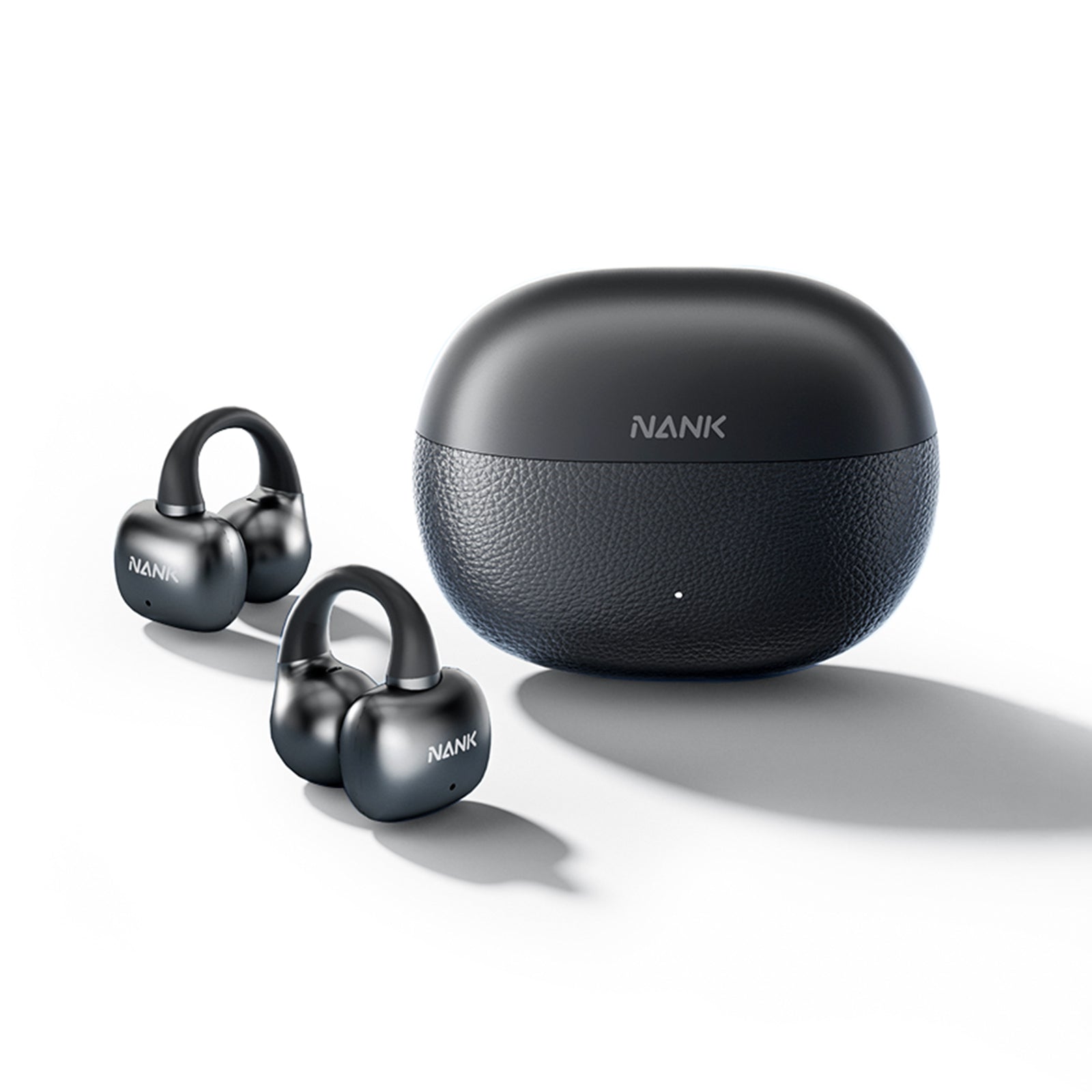
Bone conduction headphones use vibration to transmit sound toward the cochlea while keeping the ear canal open. Air conduction open ear headphones use small speakers positioned near the ear to direct sound without sealing the canal.
Both approaches can be useful for people who want a combination of audio and environmental awareness.
For runners and cyclists, that can mean listening to music while staying connected to the surrounding environment. For swimmers, specialized waterproof bone conduction headphones with onboard storage can provide an entirely different listening experience.
The key is to choose the technology based on your actual needs.
Want to explore open-ear audio designed for active lifestyles? Discover NANK’s collection of bone conduction headphone and open-ear headphones.
How do bone conduction headphones work?
Bone conduction headphones use a vibrating transducer positioned near the ear. The vibrations travel through surrounding bone and tissue toward the cochlea, allowing you to hear sound while keeping the ear canal open.
Are all open ear headphones bone conduction?
No.
“Open ear” describes the overall design rather than a specific transmission technology. Some open ear headphones use bone conduction, while others use air conduction.
Do open ear headphones leak sound?
Some leakage is normal because the ear canal is not sealed. The amount depends on volume, design, fit, and the surrounding environment.
Are open ear headphones good for running?
They can be particularly useful for outdoor running because they allow you to listen to music or podcasts while remaining more aware of surrounding sounds.
Can I swim with open ear headphones?
Swimming requires specially designed waterproof headphones with built-in audio storage, as standard Bluetooth doesn't work well underwater. You'll need to transfer audio files to the headphones beforehand. Models like the NANK Runner Diver2 Pro are designed for this purpose.
Can bone conduction headphones be used with glasses?
Generally, yes. However, compatibility depends on the shape of the headphone, glasses, and the user’s head. Proper positioning can help prevent interference.
Generally, yes. However, compatibility depends on the shape of the headphone, glasses, and the user’s head. Proper positioning can help prevent interference.
Bluetooth is not a practical way to maintain a phone-to-headphone audio connection underwater. Swimming headphones therefore commonly use onboard storage for underwater playback.
How long do bone conduction headphones last?
Battery life varies by model and usage. Many modern models provide several hours of playback. For example, NANK Runner Diver2 Pro is rated for up to 10 hours of use.
Will open ear headphones fall off when running?
A properly fitted pair should remain secure during normal running, but stability depends on the headphone design and the user’s head or ear shape.
Do bone conduction headphones work if you're deaf?
Sometimes. They are useful for conductive hearing loss, which occurs when the outer or middle ear is blocked, because the signal bypasses the outer or middle ear. If the cochlea itself is damaged, bypassing is not helpful; clinicians know this as sensorineural loss.